

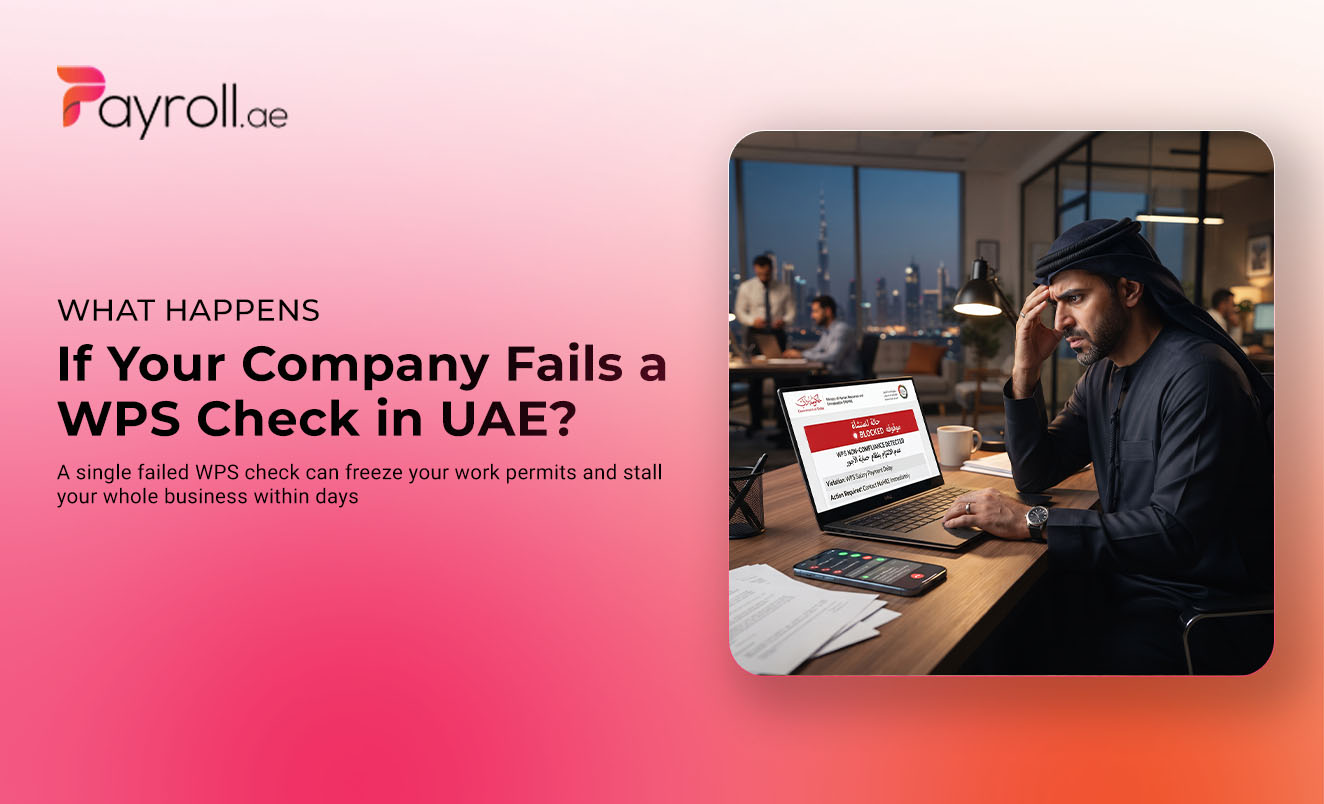
A failed WPS check is not a quiet warning. It is the start of real consequences. Salaries flagged as late or unpaid can trigger penalties and freeze your ability to hire. Many owners only learn how serious it is when the first fine lands. By then the damage is already moving.
The good news is that almost every WPS problem is avoidable. It usually comes from a missed deadline or a simple filing slip. This guide explains what actually happens when you fail a WPS check what a WPS non-compliance fine looks like and how to make sure it never happens to your business. It is the kind of protection payroll.ae builds into every pay run.
The Wage Protection System is the government-monitored way private companies must pay salaries in the UAE. In plain terms the WPS salary meaning is simple. Your staff must be paid electronically through an approved agent so the authorities can confirm they were paid in full and on time.
This is why payroll compliance in the UAE runs through the WPS. It is not an optional system. Every salary is tracked so a late or missing payment does not go unnoticed. The whole point is to protect workers from unpaid or delayed wages. For employers it means your payroll is visible to the regulator every month. Get it right and nobody notices. Get it wrong and a failed WPS check follows quickly.
A failed WPS check means the system has flagged your company for paying late, paying incorrectly or not paying at all. Once that happens the consequences stack up fast.
The first hit is financial. A WPS non-compliance fine is charged for the violation and repeated breaches raise your risk further. The second hit is operational. A wps violation in the UAE can freeze new work permits which stops you hiring until the issue is fixed. There can also be wider restrictions that affect how your business operates day to day.
The table below shows what a single failed WPS check can lead to.
| Consequence | What It Means for You |
| Financial penalty | A wps non compliance fine for the breach |
| Work permit freeze | You cannot hire until it is resolved |
| Operational limits | Wider restrictions on company activity |
| Repeat-breach risk | Harsher treatment for ongoing violations |
A single wps violation in the UAE can stall hiring and cash flow at the worst possible time. This is why payroll compliance in the UAE is treated as a priority rather than a routine task.
Most companies fail WPS checks for simple, avoidable reasons rather than deliberate wrongdoing. Knowing the common causes is the fastest way to avoid them. The biggest cause is a late salary payment in the UAE. If wages are not transferred on time the system flags it. Another common cause is a mismatch between your records and what you actually pay.
A wrong figure or a missing employee can trigger a failed WPS check. Filing the salary file incorrectly is another frequent slip. Sometimes it is as basic as a cash flow gap that delays payroll past the deadline. Each of these leads to the same place. A late salary payment in the UAE or a filing error becomes a wps violation in the UAE and the penalties follow.
Pro Tip: Set your payroll deadline a few days before the real WPS cut-off. That small buffer absorbs delays like a bank holiday or a cash flow gap and it keeps one late salary payment in the UAE from turning into a failed WPS check.
You avoid a wps non compliance fine by paying correctly and on time, every single month, with clean records behind it. Consistency is the whole game. Start by fixing a reliable payroll schedule that always beats the deadline. Keep your employee data accurate so your salary file matches what you pay. Use wps compliant payroll software that prepares the file correctly and flags problems before submission.
Many businesses now rely on cloud payroll software in the UAE for exactly this reason, since it reduces manual slips and keeps records tidy. Better still, hand the whole process to a specialist. When payroll runs through a provider like payroll.ae, deadlines are handled as routine and a failed WPS check becomes far less likely. Pairing clean payroll with proper tax and audit support from a specialist team such as audit.ae keeps your wider records aligned too.
Failing a WPS check is serious but almost always preventable. The penalties are real, from a wps non compliance fine to a work permit freeze that halts your hiring. Yet nearly every case traces back to a missed deadline or a simple filing error. Fix those and the risk all but disappears. Strong payroll compliance in the UAE is really about consistency. Pay on time, keep clean records and use the right tools or the right partner. If you want to make a failed WPS check a thing you never worry about, payroll.ae can run your payroll properly across the UAE. Keep every pay run WPS compliant with payroll.ae
Most private sector companies registered with the relevant UAE labour authorities must pay employee salaries through the Wage Protection System (WPS). It is a key part of payroll compliance and generally applies to mainland private sector employers covered by the system.
A SIF, or Salary Information File, is the electronic file an employer submits for payroll processing through WPS. It contains employee salary details and payment information, allowing the system to verify that salaries are processed correctly.
Salaries must be paid according to the agreed payment schedule and applicable UAE labour regulations. Employers generally process payroll monthly and must ensure employees receive their salaries within the required timeframe to avoid late payment issues and WPS compliance problems.
A WPS non-compliance penalty may apply when a company breaches salary payment requirements, such as failing to pay employees on time or not paying them at all. WPS violations in the UAE can also lead to restrictions on new work permits until the issue is resolved.
Yes. WPS-compliant payroll software and cloud payroll software in the UAE can help businesses prepare accurate salary files, manage employee payments, and identify payroll errors early. This makes payroll processing easier and helps reduce the risk of failed WPS submissions.